

Architecture Portfolio Reviews for Students
Get professional feedback, clear next steps, and the confidence to strengthen your portfolio from a Chartered Architect and former University Lecturer.
Creating an architecture portfolio can feel overwhelming. What do tutors actually want to see? How many pages should it be? What kind of projects should you include? As a chartered architect and former university lecturer, I have reviewed hundreds of architecture and interior design portfolios over the years. I’ve seen what works, what gets students accepted, and the common mistakes that hold talented applicants back.
On this page, I’ll show you:
What architecture schools are really looking for
How to structure a strong architecture portfolio
Common architecture portfolio mistakes to avoid
How to refine your portfolio before applying
If you’re preparing a portfolio for Architecture, Interior Architecture, or Interior Design, this guide will help you move forward with clarity and confidence.
Why Students Choose Sonia:
Chartered Architect, 20 Years of Teaching Experience
Former Head of First-Year Interior Architecture & Design, Senior Lecturer
Former Program Director, Interior & Architectural Design
Studio Tutor, BA Architecture
8,000+ Students Taught Worldwide
Honest, Practical, Actionable Feedback
What Is an Architecture Portfolio?
An architecture portfolio is a visual document that showcases your creative thinking, design skills, and ability to communicate ideas.
It is used for:
University applications
Job interviews
Work placements
Design competitions
Unlike a traditional CV, your portfolio demonstrates how you think visually and creatively. Admissions tutors are not looking for perfection. They are looking for curiosity, ideas, and potential.
What Should Be in an Architecture Portfolio?
Typical student portfolio structure:
Cover page (name, degree, program you’re applying to, year of intake)
Contents (index) and short personal introduction (if not followed by a CV/Resume)
Sketchbook work
Observational drawings
Design projects (2-3 pages) for MArch; these should be themed, with a short info that reflects the theme
Process work and development (2-3 pages)
Models or 3D explorations (2-3 pages)
Final designs (2-3 pages)
Thank you, contact details
Your portfolio should show your thinking process, not just finished work.
How Many Pages Should an Architecture Portfolio Be?
Typical range:
A3 landscape, 12-15 page PDF for college/university applications (Max 20MB)
A3 landscape, 25-30 page PDF for MArch/PGDipArch applications (Max 20MB)
A3 landscape, 20-40 page PDF for professional portfolios
Quality matters far more than quantity. A clear, well-structured 12 page portfolio is far stronger than a messy 40 page one.
Learn what a portfolio is and how to build yours, use our portfolio layout templates filled with tips and suggestions, get a portfolio review to help you submit your application with confidence.
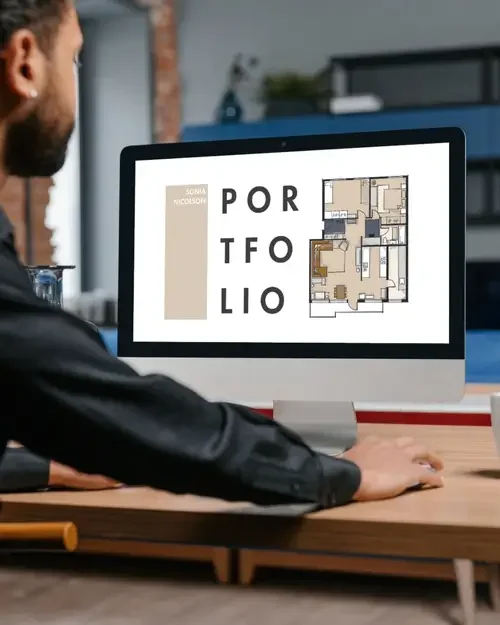
Learn How to Build a Strong Architecture Portfolio
If you want a step-by-step walkthrough, I created a short video course that explains exactly how portfolios work in architecture applications and interviews.
Inside the course, you’ll learn:
What tutors are actually looking for
How to select the right work
How to structure your pages
Common portfolio mistakes
How portfolios are used during interviews
Architecture Portfolio Canva Templates
If you already have work ready but need help presenting it clearly, these architecture portfolio Canva templates give you a clean structure to build from.
These templates include:
portfolio page layouts
helpful tips and guidance inside the template
a simple structure used by many successful portfolios
fully editable in Canva (free version)
Perfect for students who want a professional portfolio layout without spending hours designing pages.
Portfolio Confidence Review™
Who This Portfolio Review Is For
This portfolio review is especially helpful if you are:
applying to study architecture, interior architecture, or interior design
preparing for a university portfolio interview
unsure if your portfolio is strong enough to submit
wondering what tutors are really looking for
struggling to select the right projects or drawings
Many talented applicants simply need clear direction and reassurance before submitting their portfolio.
A professional review can help you refine your work, improve your presentation, and feel more confident about your application.
Book your portfolio review and receive clear, constructive feedback before you apply.
If you are not sure, please reach out, I am happy to help
Architecture Portfolio Tips and Advice
Helpful articles from the blog
Architecture Portfolio Mistakes I See Every Year
How to Improve Your Architecture Drawing Skills
7 Architecture Student Tips I Wish I’d Known Before University





Final Advice
Your portfolio doesn’t need to be perfect. It needs to show who you are as a creative thinker. The strongest portfolios show curiosity, experimentation, process, and personality. If you stay curious and focus on your ideas, your portfolio will become a powerful tool that opens doors.
Hi, I’m Sonia Nicolson - architect, educator, and former university lecturer. I help architecture and interior design students build strong portfolios, improve their drawing skills, and feel more confident presenting their ideas.
Architecture Portfolio Examples
If you're unsure how a portfolio should look, studying good examples can help
Below are examples of strong portfolio pages and layouts that communicate ideas clearly and professionally.
coming soon
Remember, admissions tutors are interested in how you think and explore ideas, not just finished drawings.
Want help improving your portfolio?
Learn portfolio strategy in the Portfolio Preparation Course
Use the Portfolio Layout Templates to structure your pages
Or book a Portfolio Confidence Review™
Architecture Portfolio FAQ
-
Yes, most architecture and interior design courses require a portfolio as part of the application process.
-
Most universities request a digital portfolio between 10-20 pages, and it can be A2 or A3 in size.
-
Not necessarily. Universities want to see creativity, observational drawing, and design thinking - they appreciate you haven’t learnt architectural drawing yet.
Preparing a portfolio for architecture or interior design?
Save this page for later or share it with a friend applying to university.

Stop guessing what tutors want. Build a clear, confident portfolio that gets you accepted.
✔ Know what universities are really looking for
✔ Stop guessing what to include
✔ Submit a portfolio that feels intentional and professional
“I finally understood what my portfolio was missing.” - Architecture Applicant 2025
You don’t need more time - you need a clear structure.
This is exactly what this course gives you.