

How to Improve Your Architecture Drawing Skills (Even If You Think You’re Bad at Drawing)
/If you’ve ever thought, “I love architecture, but I’m just not good at drawing,” you’re not alone. I hear this all the time from students, graduates, and even qualified architects. Almost always, it’s followed by the assumption that drawing is something you either have or you don’t.
That belief alone stops more people than a lack of ability ever does. Here’s what I want you to know straight away - Architectural drawing is a skill, not a talent, and skills can be learned. This guide is part of my architecture drawing series, helping students build confidence through hand drawing, perspective, and foundational skills.
Do You Need to Be Good at Drawing to Study Architecture?
If you think you're bad at drawing, you're probably not
No, you don't need to already be good at drawing to study architecture. Drawing is a skill that can be learned and improved through observation, practice and understanding a few key principles. Architecture students use drawing to explore ideas, understand space and communicate designs - not simply to create beautiful pictures.
After teaching architecture and interior design students for more than 15 years, I've found that most people don't lack talent - they simply haven't been taught the foundations clearly. Drawing is a skill, and like any skill, it improves with understanding and practice.
In this guide, you'll learn:
Why drawing feels difficult for so many architecture students
The foundations that are often skipped
How to build confidence through simple practice
Why perspective changes everything
A realistic way to improve your drawing skills
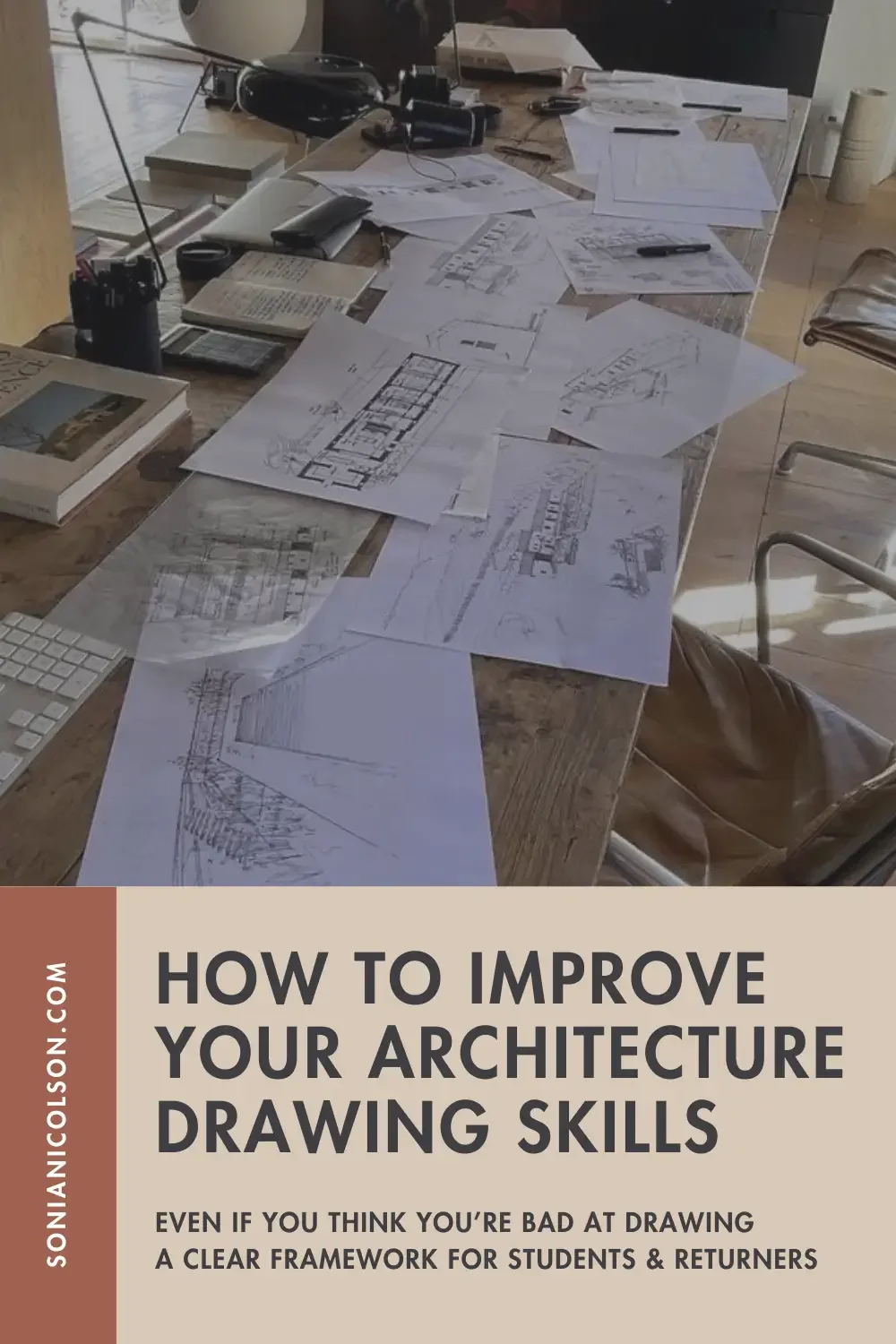
How to Improve Your Architecture Drawing Skills (A Clear Framework)
1. Understand Before You Stylise
Drawing in architecture is not expressive art.
This is an important reframe. Architectural drawing isn’t about artistic flair. It’s about communication. It’s a visual language used to explain space, proportion, scale, and ideas. Just like plans, sections, or software, it follows rules.
When those rules aren’t clear, drawing feels intimidating. When they are, confidence grows very quickly. That’s why telling students to “just sketch more” often doesn’t help. Clear presentation matters too, including learning how to write like an architect in your drawings. Practice without understanding doesn’t build confidence. It reinforces frustration.
2. Learn The Drawing Foundations Architecture School Often Assumes You Already Know
Why do so many architecture students think they’re “bad at drawing”?
Most people aren’t bad at drawing. They’re undertaught.
In architecture school, drawing is often expected rather than explained. You’re shown examples, encouraged to sketch, and surrounded by confident drawers, but the foundations are rarely taught slowly and clearly. So when your drawings don’t match what’s in your head, it starts to feel personal.
I remember being at college learning how to draw interiors in two-point perspective. I’d designed a space with stairs, a ramp, and mirrors, and I wanted it to look realistic and correct in perspective. I tried to guess it, but perspective isn’t something you can guess or make up. You have to follow the rules.
At the pin-up, I looked around at the other students’ work and felt like they got it. Their drawings looked stronger than mine. I didn’t want to compare myself too harshly - we were all learning, but I could clearly see where I’d gone wrong. And that, I later realised, was half the battle.
I booked a tutorial with my design studio tutor, and he walked me through it step by step. That’s when it clicked. I finally understood how grid lines work and how to follow them back to the vanishing points.
That evening, I went home and tried again. Drawing stairs. Drawing reflections in mirrors. These are challenging things to draw in perspective, but this time it worked. And the feeling of getting it after struggling for so long was huge.
3. Focus On Perspective Early
Perspective is usually the real issue.
When someone tells me they’re bad at drawing, nine times out of ten, they’re actually struggling with perspective. Perspective isn’t intuitive. It’s structural.
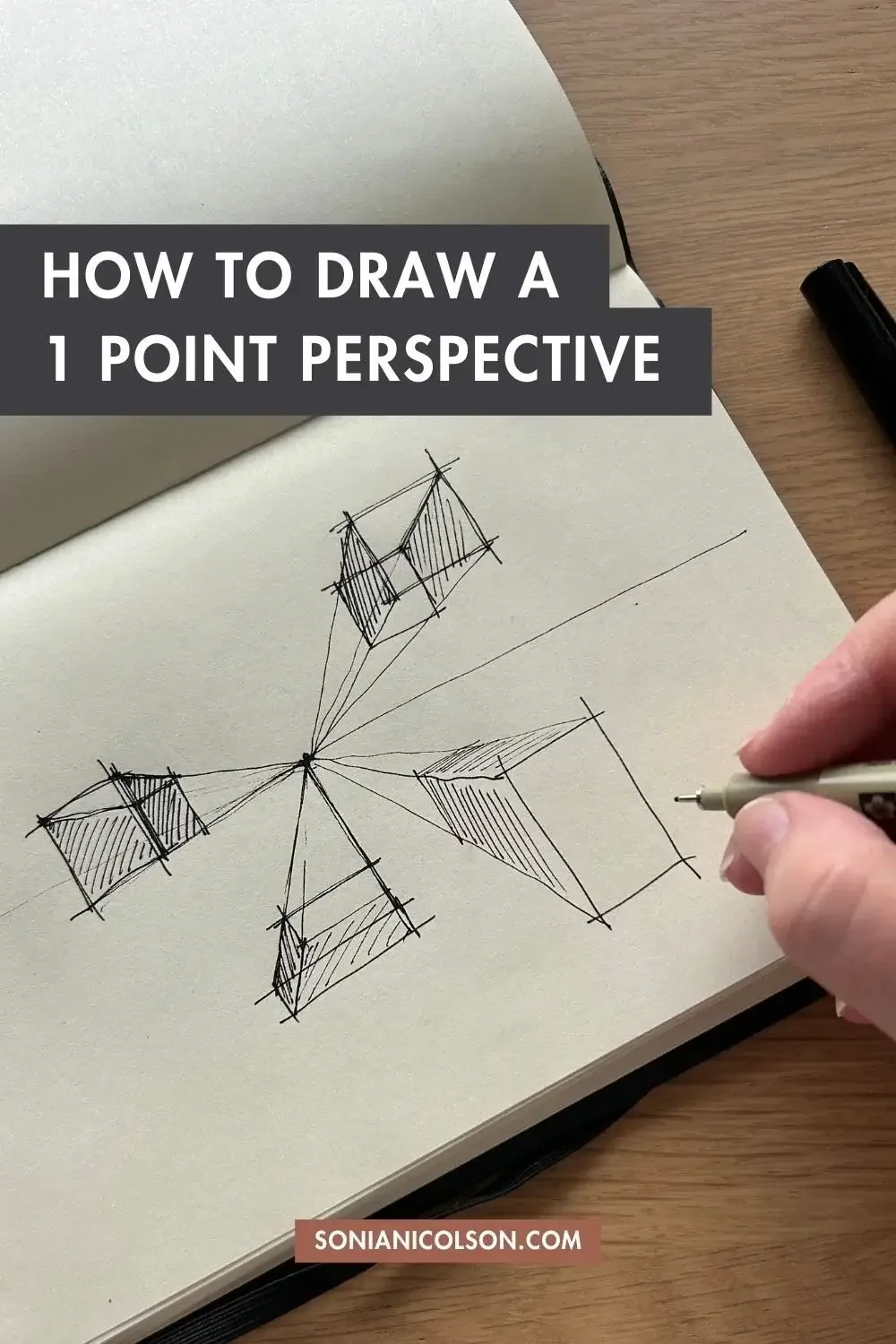
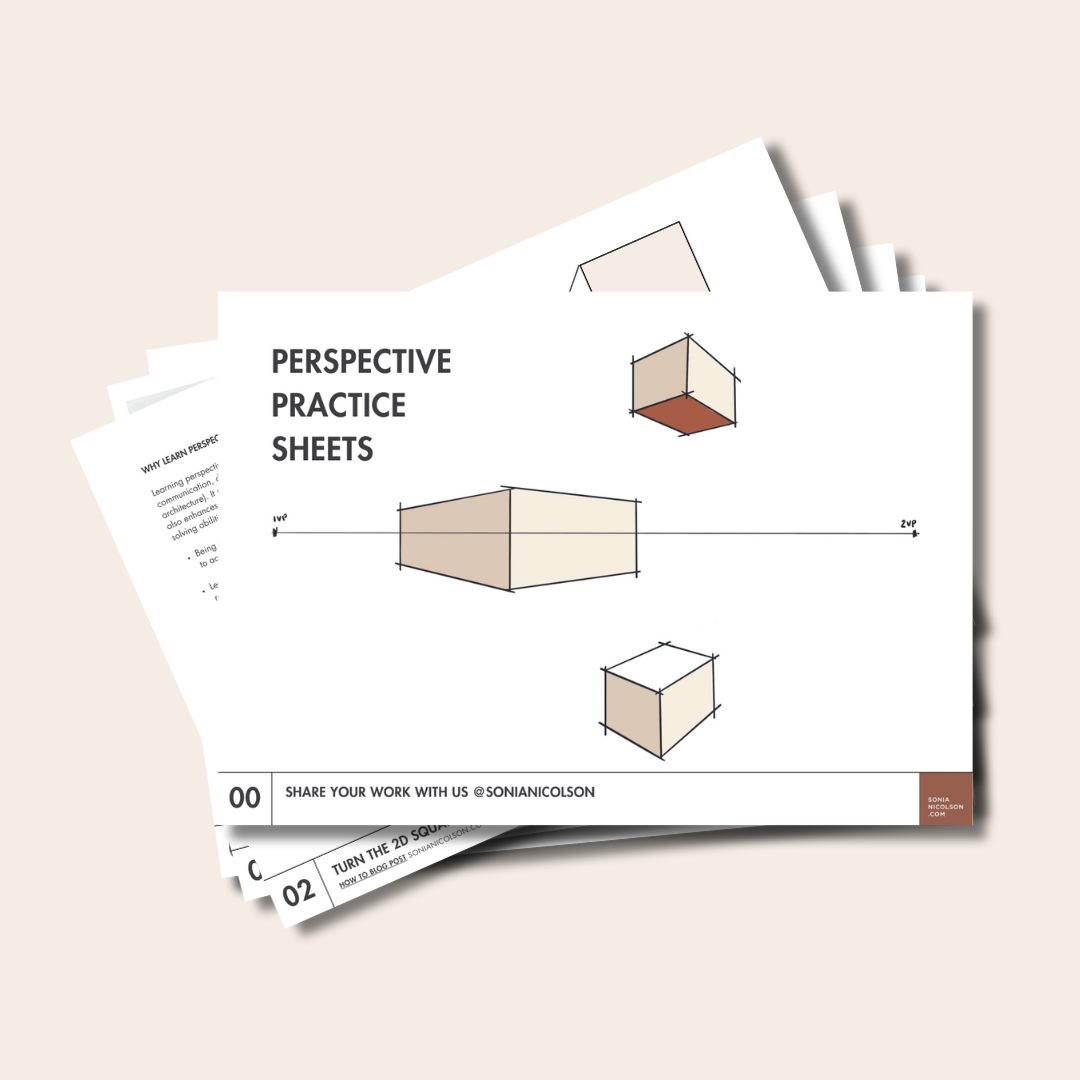
Once you understand eye level, vanishing points, and simple one- and two-point perspective, drawing buildings stops feeling random. This is often the exact moment students say, “Oh…that actually makes sense now.”
If you’re just starting, begin with this guide to one-point perspective drawing before moving on to more complex spaces. When you’re ready, this deeper guide to two-point perspective for architecture students will help you draw more dynamic interiors and exteriors.
4. Practice Messily Before Neatly
The mistake most people make when trying to improve.
Most students try to draw nicely before they understand clearly.
They worry about line quality, neatness, or style too early. They hesitate. They erase. They judge every mark as they make it. But learning happens in the messy stage. Confidence comes after repetition, not before it. If perfectionism is holding you back, this post on overcoming perfectionism in drawing might help you loosen up.
I have shelves of sketchbooks filled with messy drawings now, but it didn’t start that way. I used to sit down expecting to create a finished drawing straight away, as if it should just happen the first time. If I made a mistake, I’d rub it out and keep going, usually frustrated, pressing too hard, ending up with a sore hand. What I didn’t realise then was that I needed to warm up first. I needed time to get into the zone and let my hand loosen up.
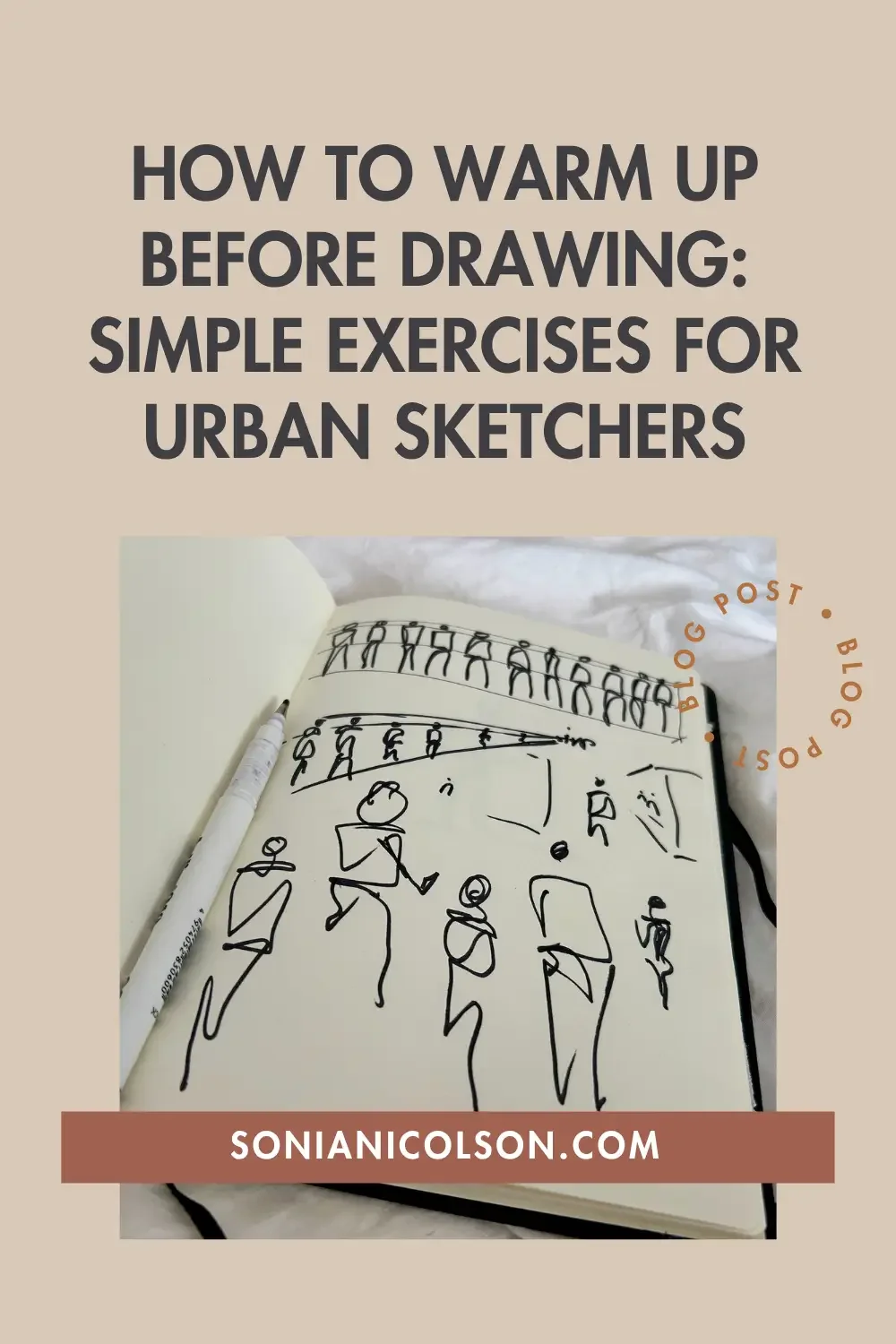
If you’d like specific exercises to get started, try these simple drawing warm-up exercises before your next sketching session.
Now, before I start a sketch, I warm up with simple lines, shapes, circles, and lines over lines. Only after that do I move into a drawing.
Teaching first-year students brought all of this back. Many felt embarrassed by their work, but they were simply learning, and that was a good thing. I’d get them to spend time drawing random lines and turning them into buildings, experimenting, and having fun with it.
We drew left-handed and right-handed. With our eyes closed. To music with different rhythms. We drew objects, people, landscapes, buildings, and small architectural details. We drew from real life, from books, and from photographs. And almost without fail, the drawings looked worse before they suddenly improved. That’s the process. And it’s worth trusting.
5. Draw Smaller, Not Longer
Ten focused minutes are enough.
Drawing one corner of a room, one window, or one chair builds more confidence than attempting a full building every time. Small wins teach your brain that progress is possible. This is especially important if you’ve taken a break from drawing or feel out of practice.
6. Let Style Come Last
Style comes after understanding.
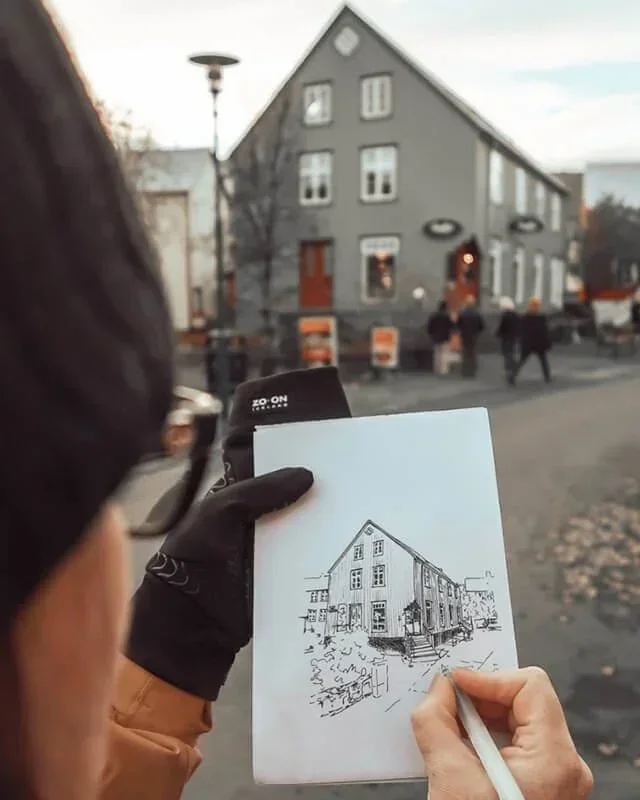
Instagram sketches can be inspiring, but they can also be misleading. Stylised drawings sit on top of solid foundations. They are not the starting point. Drawing real spaces, even imperfectly, trains your eye far more effectively than copying someone else’s finished style.
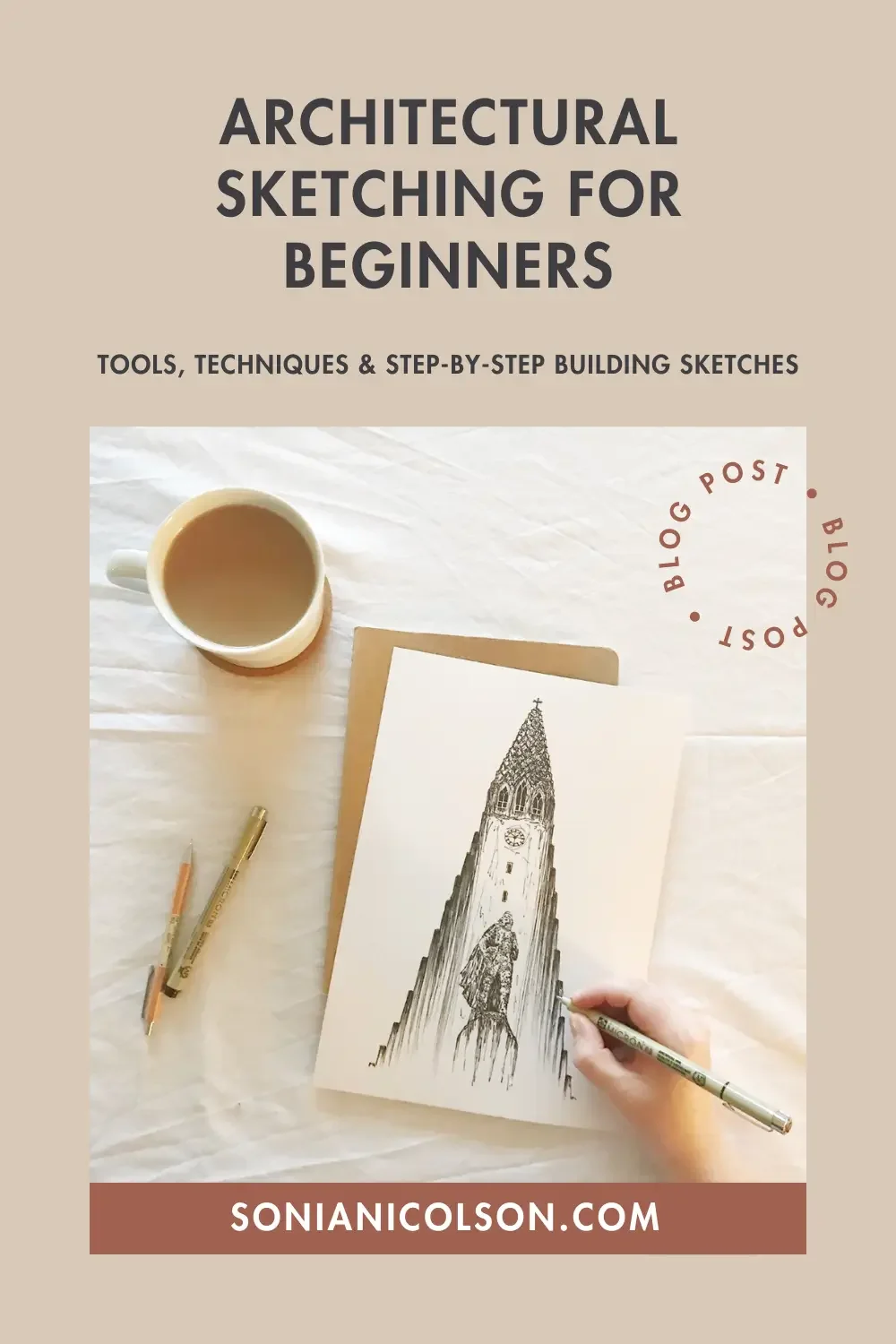
Once your structure is clear, you can explore tone and depth with architectural ink rendering techniques. And once proportion and perspective are in place, your own way of drawing emerges naturally.
What I Wish Every Architecture Student Knew
If I could tell every new architecture student one thing, it would be this:
Stop judging your drawings against someone else's finished sketch. You're comparing your beginning with someone else's years of practice. I've taught students who arrived convinced they weren't creative enough. A few months later, they were producing work they never thought possible - not because they suddenly became talented, but because they finally understood the process behind the drawing.
Confidence doesn't arrive before you start. It grows because you started.
If You’re Applying To Architecture School Or Returning To Drawing
Over the years, I’ve worked with students who were convinced they weren’t creative enough. Students who felt behind everyone else. Students returning after burnout, career breaks, or motherhood. Some hadn’t drawn properly in years.
What they all had in common wasn’t talent. It was a willingness.
As a Senior Lecturer at a leading arts university, I reviewed hundreds of portfolios from students in the UK and internationally. The portfolios weren’t always strong, but you could see the effort. And when I met the student behind the work, there was almost always passion there too.
They wanted to learn. They wanted to understand the techniques and make them their own. They understood, often instinctively, that drawing isn’t just about producing a nice image. It’s a way of thinking, feeling, designing, and communicating ideas. And that foundation matters, whether you’re just starting or finding your way back.
FAQ
-
Because architecture drawing is rarely taught step by step. Many students are expected to sketch from day one without fully understanding perspective, proportion or visual communication. That doesn't mean you lack ability - it means you're learning a skill that deserves to be taught properly.
-
Everyone progresses at a different pace, but improvement often comes much faster than students expect once they understand the foundations. In my experience, confidence usually grows long before someone considers themselves "good" at drawing.
-
Not in the way many people think.
Architects don't need to create perfect works of art. They need to communicate ideas clearly. Hand drawing is one of the best ways to explore and explain those ideas, whether you're sketching a concept, discussing a project or developing your own thinking.
-
Focus on understanding before trying to make beautiful drawings.
Learn perspective, practise simple forms, draw regularly, and allow yourself to make imperfect sketches. That's how confidence develops.
-
Absolutely. Some of the students who told me they "couldn't draw" made the biggest improvements because they were willing to learn the process. Drawing isn't about being born talented. It's about understanding how to see, think and practise with intention.
Start where you are
If drawing feels like a block for you, let this be the reframe you take away:
You’re not bad at drawing
You’re learning a language you were never properly taught
And once the foundations are clear, practice becomes lighter, calmer, and even enjoyable.
You don't become confident by waiting until you're good enough to draw. You become confident by drawing before you feel ready.
Every sketch teaches you something.
Every page is progress.
Improving your architecture drawing skills isn’t about drawing better overnight. It’s about learning the foundations, practising intentionally, and trusting the process.




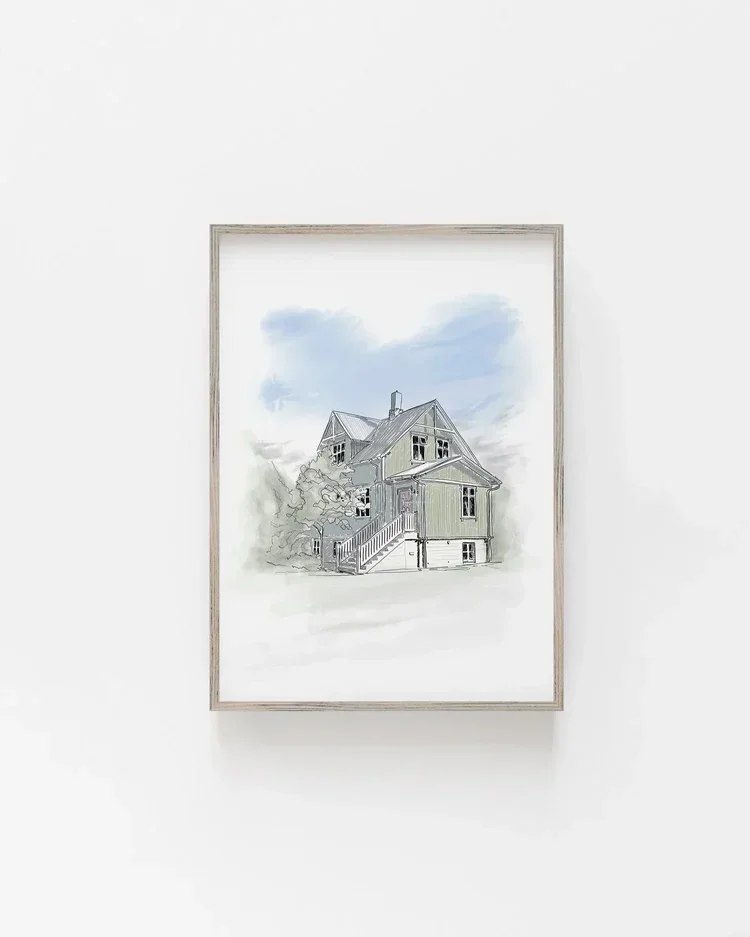

Architectural lettering is the professional handwriting style used on drawings, plans, and portfolios. In this guide, you’ll learn the simple rules architects use for clean, consistent lettering - plus download free practice worksheets (PDF) to improve fast.