

What Architects Can Learn from the Artemis II Mission
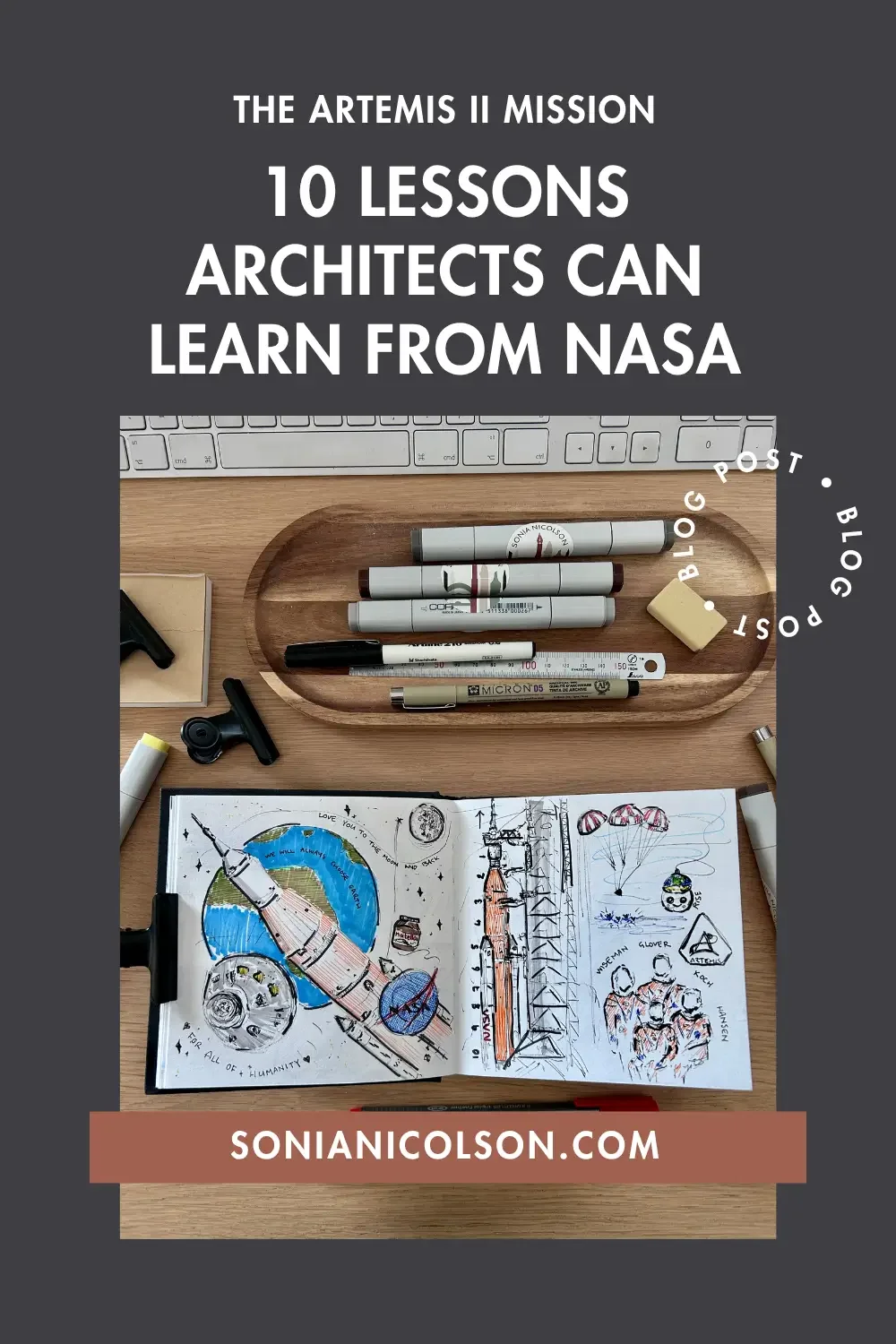
/As an architect who usually sketched buildings and urban environments, I wasn’t planning to draw a rocket, but something about the NASA Artemis II mission has had me glued from launch to splashdown, and I can’t get enough.
Maybe it’s the scale of it that links back to architecture, the ambition, or maybe the fact that thousands of people are working together, quietly, behind the scenes, to make something almost impossible happen - and they did!!
So I opened my sketchbook, and as I started drawing the Space Launch System and the Orion spacecraft, I realised that this isn’t just engineering, this is design.
Why This Mission Feels So Relevant to Architecture
As architects, we’re trained to think in systems: structure, movement, materials, people, experience, and this mission has all of it.
It’s not just a rocket. It’s a fully coordinated, human-centred design problem, and I love it.
The Artemis program requires:
clarity and trust
clear, professional communication
and an unbelievable level of detail
It reminded me so much of being in the studio - that feeling of working towards something bigger than yourself.
What I Sketched (and Why)
For this sketchbook spread, I wanted to capture more than just the rocket. I drew the full elevation of the launch system, close-up details of the capsule, the flight path between Earth and the Moon, and small human moments, like the crew, rise and the floating Nutella.
Because that’s what design really is. Not just the object but the story around it.
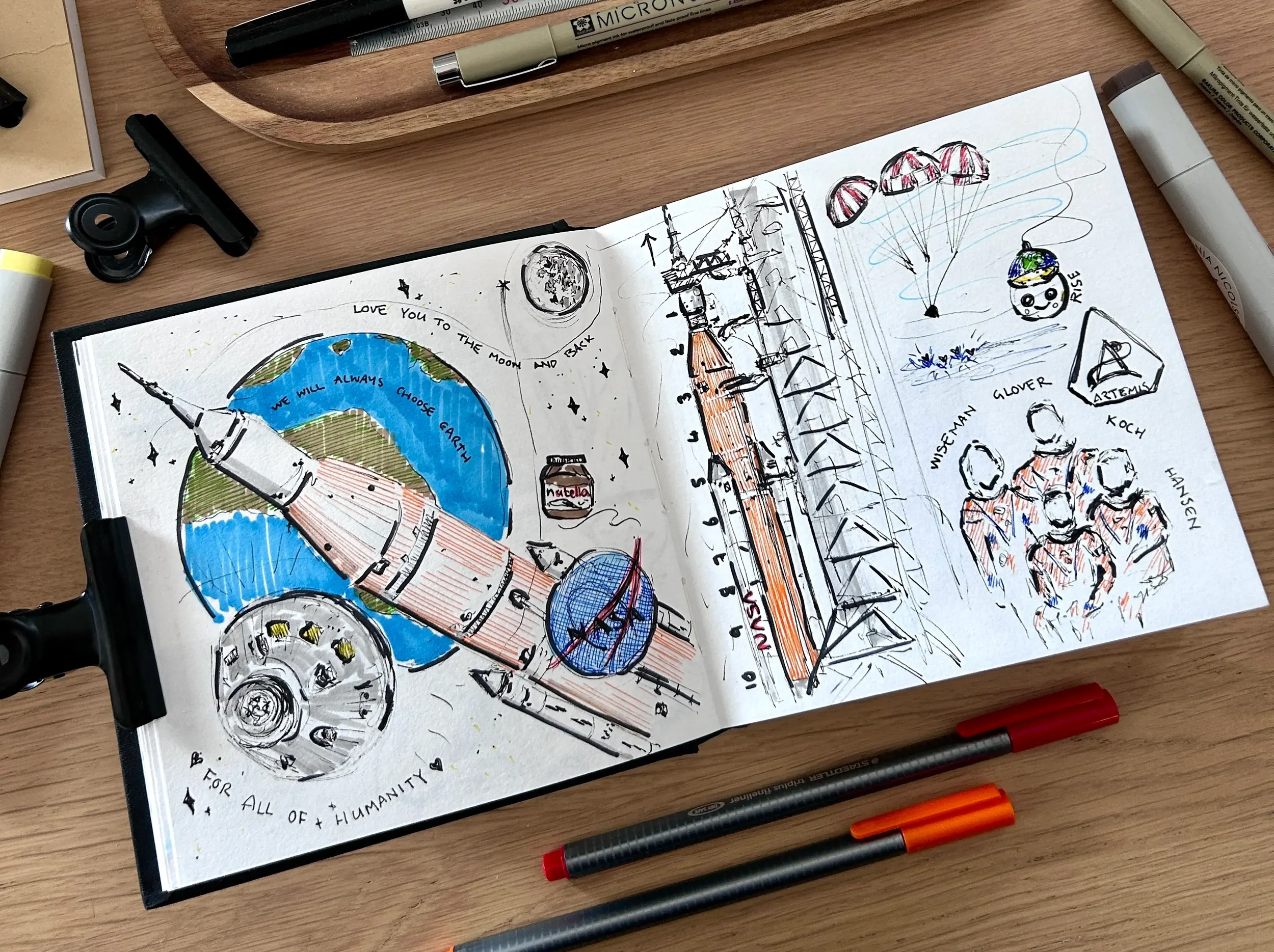
Sketchbook exploration of the Artemis II mission, focusing on structure, systems, and human-centred design.
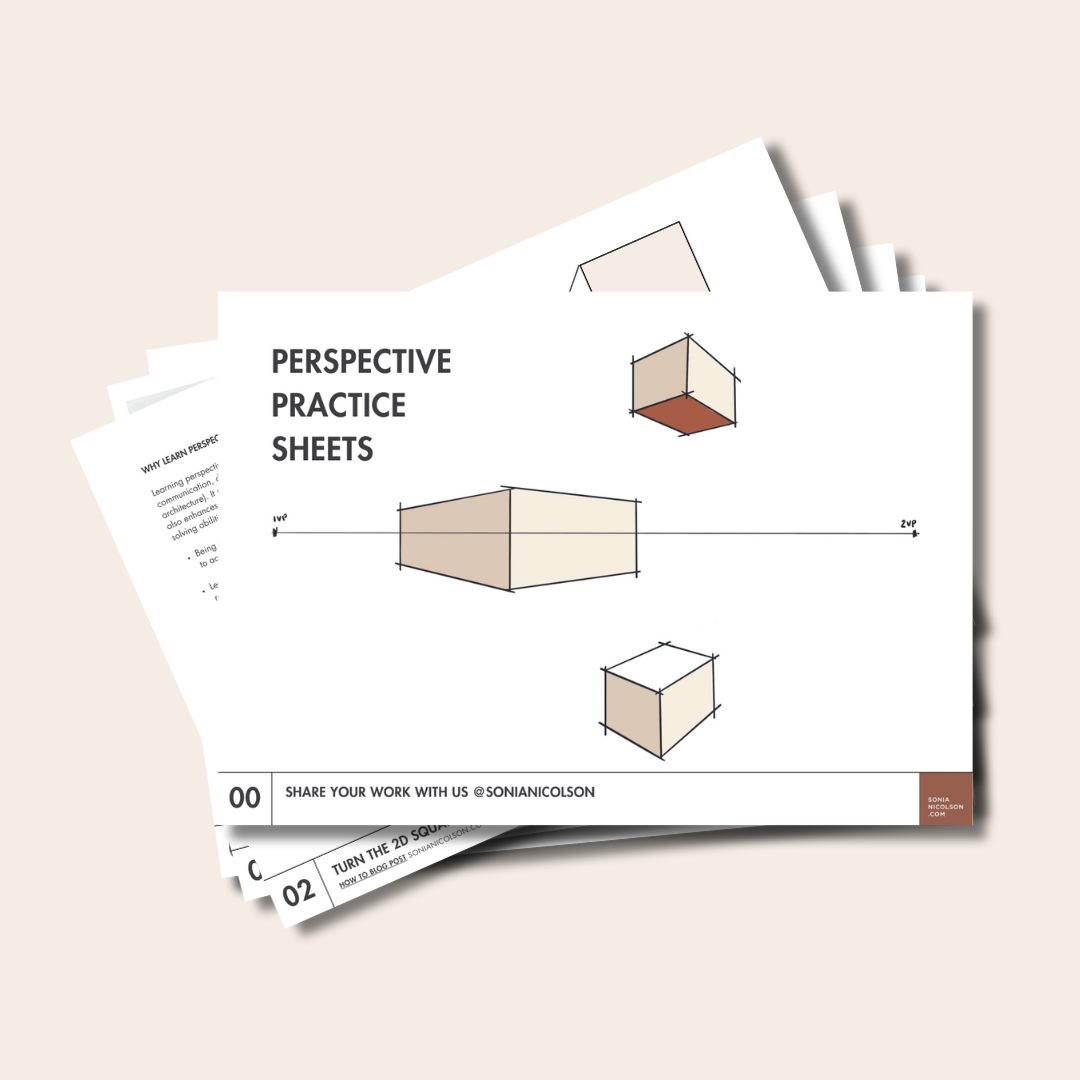
If you’re learning to communicate your ideas visually, this is exactly why I created my perspective drawing ebook - to help you build that confidence step by step.
10 Lessons Architects Can Take from Artemis II
This is what stayed with me while I was drawing:
1. One clear mission
Everything works because everyone is aligned. No confusion, no mixed direction.
2. Collaboration over ego
No one designs something like this alone. The best ideas come from working together.
3. Precision matters
Details aren’t optional. They’re everything.
4. Trust the process
Years of unseen work culminate in a single visible moment.
5. Communication is everything
If one part of the system doesn’t understand another, the whole thing fails.
6. Systems thinking
Nothing exists in isolation. Every decision affects something else.
7. Leadership carries responsibility
Decisions matter. People rely on them.
8. Resilience is part of the process
Delays, setbacks, changes - they’re expected, not avoided.
9. Design for people
At the centre of all of this are humans.
10. Believe in what you’re building
You don’t commit to something like this unless it truly matters to you.
What This Made Me Reflect On
There was a time in my career when I felt like I had to choose between a serious career in architecture and building a life that worked for me.
But projects like this remind me that you can build something meaningful in so many different ways, whether it’s a rocket, a building, your family, a business or even just a sketchbook page.
It all comes back to the same thing:
vision
clarity
and the courage to create
Final Thought
Design isn’t just about what we build. It’s about how we think, how we work, and how we show up. And sometimes a rocket can remind you of that. If you want to build confidence in your drawings and communicate your ideas clearly, I’ve created a step-by-step perspective drawing ebook to help you get started.
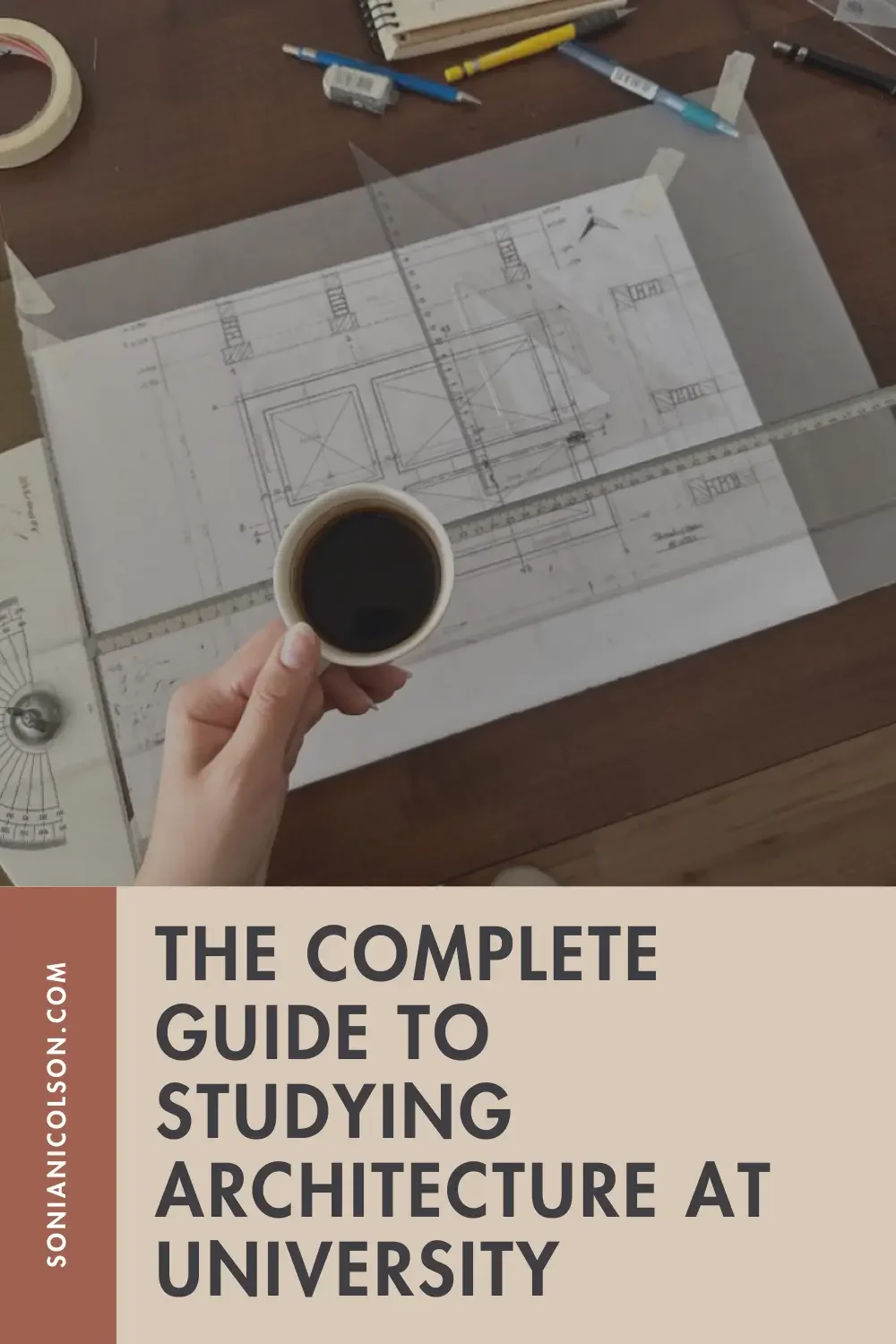




How to Draw One-Point Perspective: A Step-by-Step Guide for Architecture & Interior Design Students.