

Dear Architecture Student: What I Want You to Know Before Your First Day of Architecture School
/You’ve got your place. Maybe you’ve bought the sketchbooks. You’ve probably watched far too many architecture-school videos and started wondering whether everyone else already knows how to draw, design buildings and use every piece of software.
They don’t.
After more than 15 years of teaching interior and architecture students, there are a few things I wish I could tell every student before they walk into architecture school for the first time.
If drawing is one of the things you’re most nervous about, start with my BLOG POST: How to draw architecture by hand, where I’ve brought together the foundational drawing skills I think every architecture student should learn.
1. Before you arrive: you don’t need to know everything already
I get it. You’re excited and nervous, and you don’t really know what to expect, but I want to reassure you that you don’t need to be brilliant at drawing.
Worried about drawing before architecture school?
I’m teaching the drawing skills architecture school often assumes you already know over on Instagram @sonianicolson, so please make sure you’re following.
You don’t need a fully formed architectural style because that will come. And please don’t say that you’re ‘bad at drawing’. Drawing is a skill. Skills can be learned, and skills improve with practice. I’ve put together my BLOG POST: a guide to improving your architecture drawing skills to show you where to start.
And no, you don’t need to know all the software. Honestly, why would you already?!
You don’t need to understand what a crit is. Your first crit will be here in no time, and you’ll get through it. It might suck, but you’ll get better at them and maybe even enjoy them.
Architecture school is where you’re supposed to learn these things.
2. What architecture school is actually like
It’s very different from school (or college), and it might differ from university to university, and country to country. I’ve taught in the UK, Iceland, India and Japan. All of these looked different, but the actual education and learning outcomes were the same.
School is typically one teacher saying, “Here is the question. Find the correct answer.” And you read the class material or go off in pairs, or to the library or write an essay or something. Usually a smaller question, a shorter timeline, a chance to show and discuss your thinking.
Architecture school is a lecturer or tutor saying, “Here is a complicated problem. Develop a position and show us why you think it works.” Sometimes it's a project brief, an exam or an essay. That might mean you go off on your own and work towards a submission. You might do group work with people you’ve never met before. You’ll likely work in a studio at some point, a computer lab and also the workshop.
You’ll need to develop ideas, concepts, research and present a design idea with drawings, a model, precedent (case) studies and so on. Usually you submit and get a grade or present (crit) in front of the year group and get feedback (good and bad). There will be more independent study, and to get support and guidance on your project, you’ll need to sign up for a tutorial.
That shift can be really unsettling for first-years.
3. Your first few days
Go to any welcome events, even (actually, especially) if you feel awkward. Introduce yourself to the person sitting beside you. They’re probably nervous too. Learn people’s names.
If there’s a tour, great. If you didn’t go on it, make sure to find the studio, the workshop, the tutor’s office, the library and so on. Work out where you can print and how you get printing credit. Figure out where to get art supplies and start saving cardboard and so on for cheaper models.
Find somewhere cheap to eat, figure out where you’ll do laundry.
Join whatever architecture/design society exists. My undergraduate university has a society where we could attend lectures from local architects, a dinner/dance social for networking and visit architects’ practices to get tutorials with practising architects.
Don’t wait until you feel confident to participate.
4. Making friends and finding your people
Architecture courses can become incredibly close-knit because students spend so much time together. Your studio friends quickly become your uni family.
There is a lot of work, and everything starts to feel high pressure when deadlines loom, so create a study group. This group should help each other out. You’ll be learning a lot, and it’s hard to remember everything, so have each other's backs. Start the WhatsApp chat - they’re not your competition (even though they kind of are), but they’re not.
Ask, “Anyone going to the library?” Invite someone for coffee. Don’t assume everyone else has already made friends.
I can almost 100% promise you another person is standing there thinking exactly what you’re thinking, or wanting to ask the same question as you.
5. How to approach your first design project
Don’t try to find the “right answer.” Read the brief properly, highlight the key points and outcomes. List the requirements. Put the deadline in your calendar and give yourself a pre-deadline so you know you’ll be ready.
Highlight the assessment criteria
Visit the site or research it
Take photographs
Sketch
Ask questions
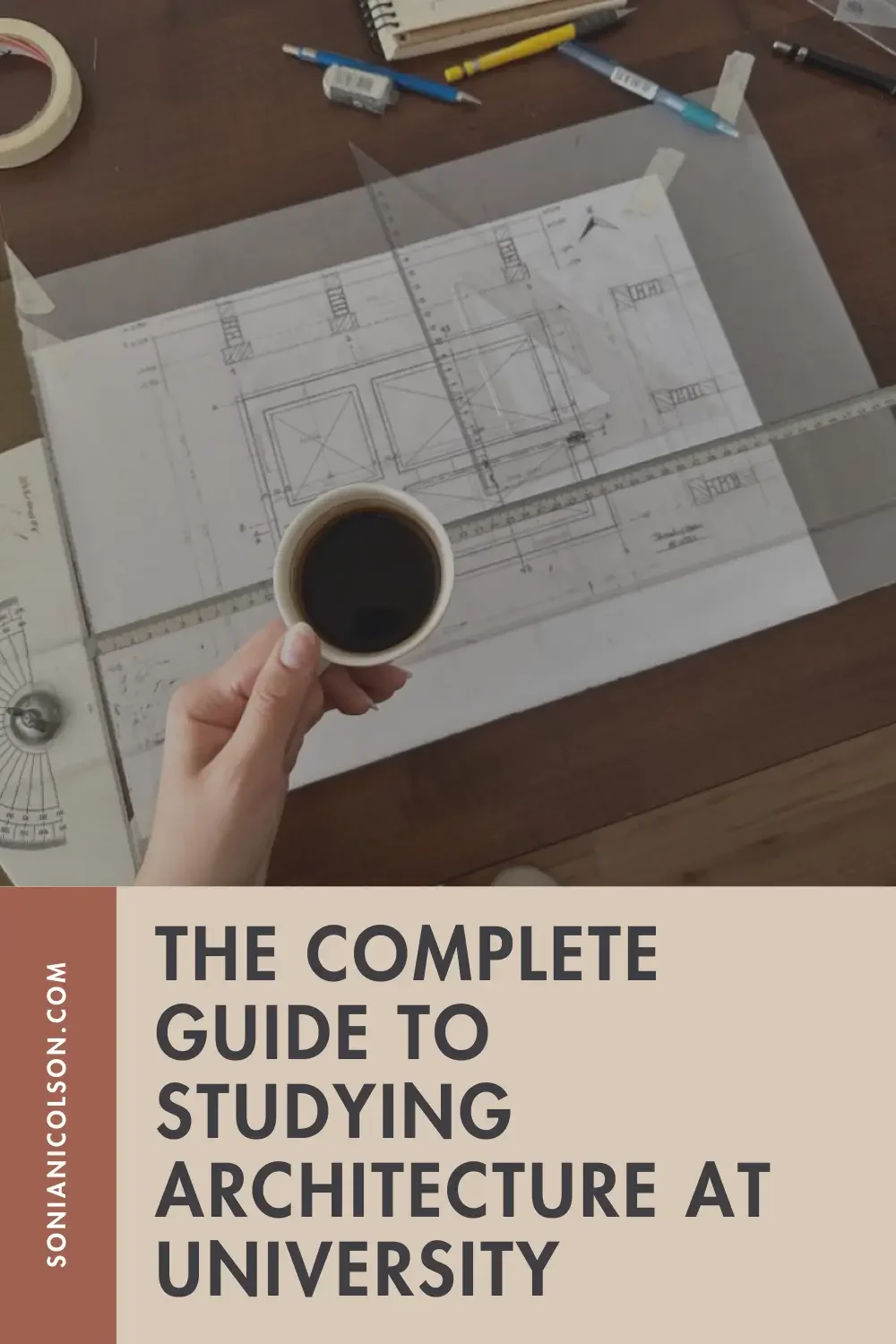
One of the first things you’ll probably need to get comfortable with is communicating space in plan view. My step-by-step guide to drawing a floor plan by hand will help you understand what to include and how to make your drawings readable.
If you have a tutorial. Always attend. Even if you feel like you’re behind and struggling and didn’t do anything. That’s literally what they’re there for. Bring something to every tutorial. Don’t fall behind. Don’t start to blend into the background.
Never skip a tutorial because you don’t think you’ve done enough work.
I’ve seen students do that for years. The tutor isn’t responsible for your work, your attendance, your passing. You are. Even three sketches and a question give the tutor something to work with - and you will come away feeling better.
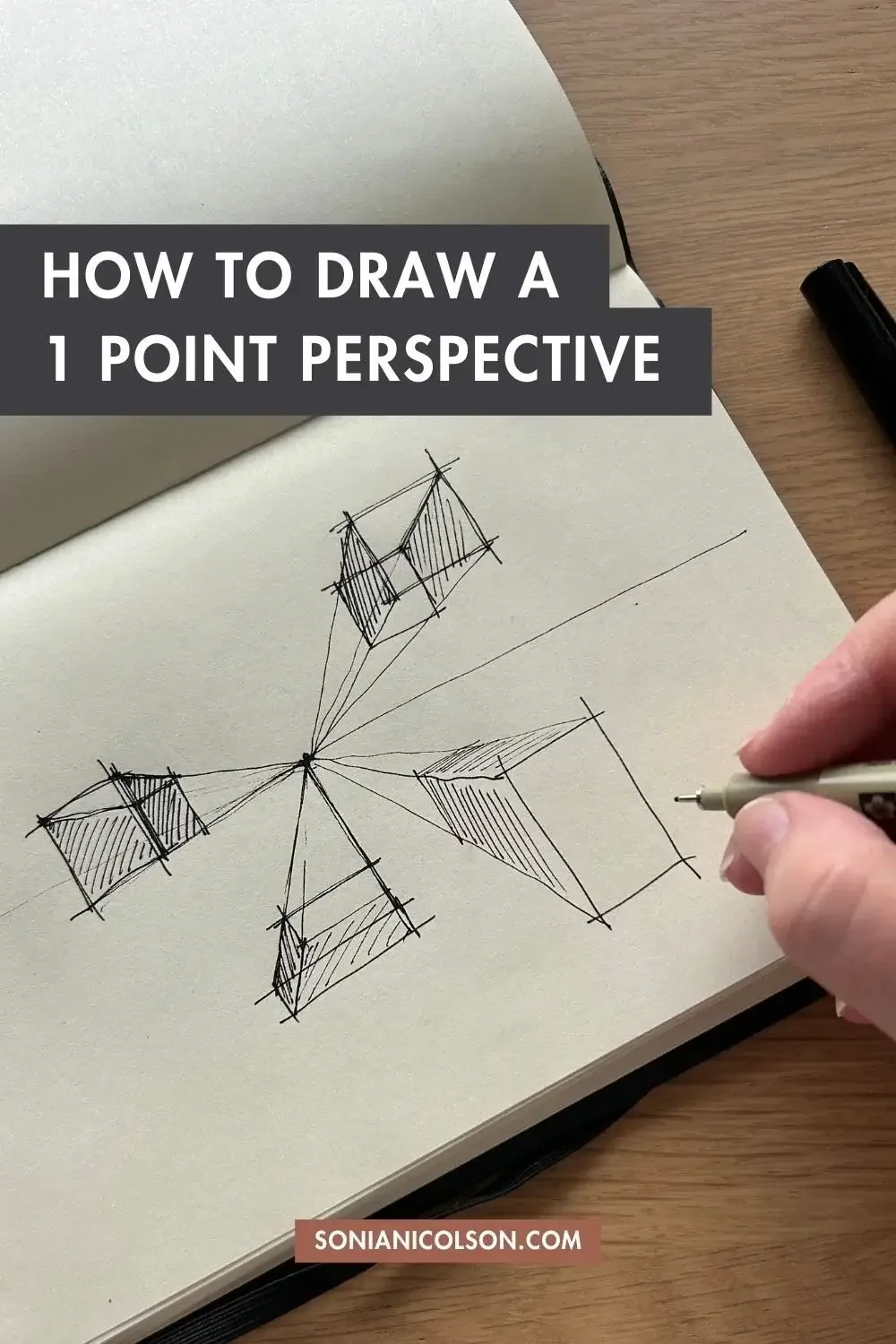
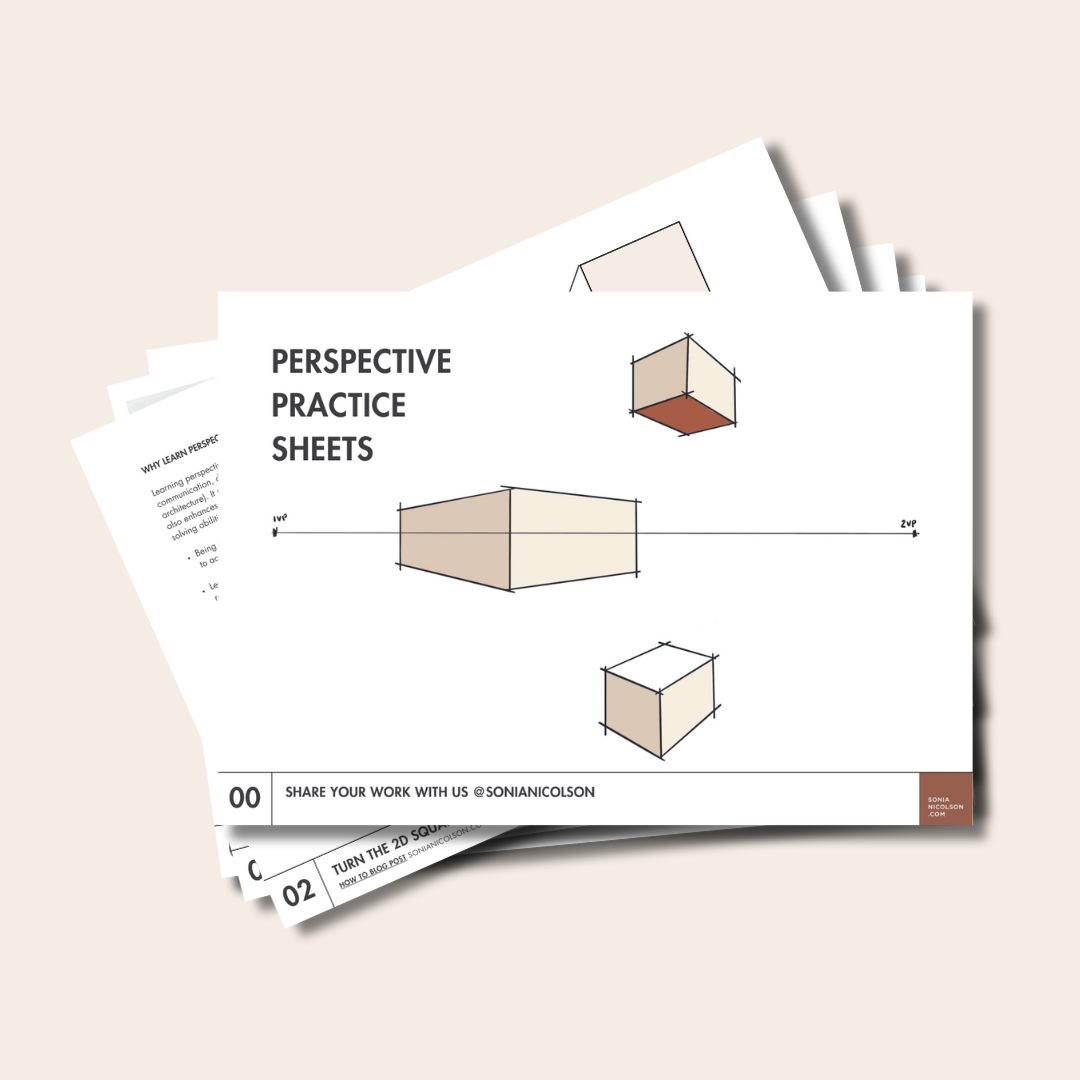
You don’t need to arrive knowing perspective perfectly, but understanding the basics will make studio life much easier. Start with my BLOG POST: beginner’s guide to one-point perspective drawing. Once you’re comfortable with that, move on to my BLOG POST: two-point perspective drawing guide - particularly useful when you start sketching buildings and spaces.
That tutorial might be in front of others but don’t let that worry you, it’s actually a chance to learn from their tutorial too. They might discuss something you didn’t know you needed to hear.
This is also a good opportunity to connect with your tutor if something is troubling you. You can then arrange to meet separately and discuss - even if it’s changing course. Tutors want the best for you, honestly, we do.
I’m sharing a whole series for students starting architecture school this autumn - including tutorials, crits, drawing, studio culture and the things I wish someone had told me before university. Follow along on Instagram @sonianicolson


6. How to speak to your tutors
The academic staff are not some higher power, scary, unapproachable bunch. We’re just tutors, passing on our knowledge and helping you grow in your education and learning. Tutors aren’t expecting finished work in tutorials - we often prefer the messy ‘work in process’. A polished piece of work is harder to develop than something that’s in development.
Turn up to your tutorial and say, “I’ve tried these three options, and I’m not sure which direction is strongest.” You’ll get a far more useful response than, “I don’t know what to do.”
Ask specific questions
Write down feedback or ask a classmate to take notes for you
And if you don’t understand something, ask
You can also get an online tutorial with me, and no one needs to know!!
7. The architecture-school supplies you actually need
Before you buy an enormous collection of expensive drawing equipment, read my BLOG POST: guide to the best pens for architectural lettering and line weight. You really don’t need as much as you might think.
Pens | Best Pens for Architectural Lettering & Line Weight
Drawing | Ultimate Architecture Drawing Guide
Perspective | Perspective book (coming soon)
Floor plans | How to Draw a Floor Plan by Hand
Lettering | Free Architecture Lettering Guide
Want to practise before your first day?
If architectural lettering is completely new to you, download my FREE Architecture Lettering Guide. It gives you something simple and practical to practise before university without feeling like you need to somehow teach yourself architecture before you arrive.
8. Time management (and why architecture students get this wrong)
There is a stereotype of architecture students working through the night and, although I pulled a good few all-nighters, I feel like a lot of them could have been avoided by being much more organised and sticking to a schedule and workflow, so here’s my advice:
Start earlier than feels necessary
Break projects into tiny deliverables
Set your own deadline before the actual deadline
Work in a study group
Have material on hand and ready
Don’t spend eight hours perfecting one drawing while ignoring the rest of the project
Photograph/model/draw as you go
Back everything up
Fuel yourself - eat well and stay hydrated
Jump in the shower, brush your teeth
Sleep - even if for a couple of hours
Go outside - get perspective, ground yourself, fresh air and inspiration
Socialise - with other people than architecture students
Architecture school does not need to consume your entire identity, but it might feel like it does a lot of the time.
In my undergraduate degree, I lived in the studio and with my study group for most of the first year, but in my final year, I shared a house with girls studying law, music technology and drama. It meant we had other things to talk about, different interests, different friend groups. That gave a fresh perspective, and I could step away from architecture a bit.
In my postgraduate, I lived at home with my parents for the first year - I couldn’t study architecture and work part-time (and I’d spent all my money travelling around Asia and Australia the summer before). Then I got the scholarship, and my final year was spent in Japan.
9. Feeding yourself/living away from home
Nobody talks about how simultaneously you’re expected to:
learn architecture
make friends
do laundry
budget, earn
cook
clean
navigate a new city
possibly live away from your family for the first time
Of course you’re overwhelmed. Go easy on yourself.
10. How to get good grades in architecture school
Understand what you’re being assessed on. It’s that simple, even though that’s not always simple.
Read the learning outcomes, highlight them and list them to tick off.
Make a list of the submission requirements, check them off as you go.
Listen during tutorials (not just your tutorial).
Respond to feedback, even if it’s bad or harsh.
Show development rather than only final images (progress and your process matter).
Communicate your idea clearly.
Document your process.
Don’t leave presentation decisions until the night before (get some sleep).
If your drawings look flat or difficult to read, it may not be your drawing ability at all. Often it’s line weight. Read my BLOG POST: guide to architectural line weights to understand how a few simple changes can make drawings much clearer. This, and adding people into your drawings, is one of the quickest ways to improve your work.
11. What to do when your confidence gets knocked
Because it will.
A bad crit
Someone else’s incredible drawing
The competition (but remember they’re not your competition)
Feeling like someone stole your idea
A tutor who doesn’t understand your idea
Instagram/Pinterest comparison
A disappointing grade
Life getting in the way
One project is not a verdict on whether you should be an architect.
I failed the first-year final presentation of my postgrad and had to resubmit. A huge blow to my ego and my confidence, but I took what I thought was a beautifully creative and artistic expression of my design proposal and fully computerised it. I resubmitted, passed, and was awarded a scholarship for Academic Excellence. I spent my second and final year studying architecture at an engineering school in Japan, being taught by some inspirational Japanese architects and got to mentor younger students. Failure is never the end - sometimes it takes you to much better outcomes - but it’s a tough road to go down.
12. What I wish every first-year architecture student knew
You don’t have to prove that you belong there. You got in. Now your job is to be curious. Draw badly. Ask questions. Try things. Talk to your tutors. Make friends. Go places. Look at buildings. Fill sketchbooks. Follow @sonianicolson on Instagram, lol. Learn how you work best. And give yourself permission to be a beginner.
Good luck!!
Want some one-to-one help before you start architecture school?
Sometimes you don’t need another YouTube video or Pinterest board. You just need to sit down with someone who understands architecture school and ask all the questions going around in your head.
I spent more than 15 years teaching interior and architecture students at university, and I now offer one-to-one mentoring and tutorials for students who want some individual support.
You might want help getting your drawing skills ready before your course begins. You might be confused about what to expect from studio. You might want someone to look through your work, help you understand a brief, talk through your ideas or simply answer the questions you don’t quite know who else to ask.
That’s exactly what these sessions are for.
You don’t need to arrive with perfect drawings or a beautifully organised portfolio. Bring your sketchbook, your questions, your worries, your ideas - or even just the feeling that you don’t know where to start - and we’ll work out what would help you most.
Book a 1:1 architecture mentoring session with me
And if you’re not ready for that yet, come and find me on Instagram @sonianicolson. I’m sharing drawing tutorials, architecture-school advice and the lessons I wish every student knew before their first day.



Expert feedback on your architecture project from a Chartered Architect and former University Lecturer.
Sometimes you don’t need another YouTube tutorial, another Pinterest board or another night staring at your drawings.
You need someone experienced to look at your work with you and help you figure out what to do next.
My 1:1 Architecture Tutorials are private online sessions designed to give you focused, practical feedback on the work you’re doing right now.
Bring your drawings, plans, sketches, models, presentation boards or even a half-developed idea, and we’ll work through it together - just like we would in a university tutorial.
With over 15 years of experience teaching architecture and design students, I’ve helped thousands of students develop their ideas, improve their drawings and communicate their projects more clearly.
You don’t need to have everything figured out before we meet.
That’s the point of the tutorial.
Is This Right for You?
A 1:1 tutorial is ideal if you’re:
Studying Architecture, Interior Design or a related creative course
Stuck on a current design project
Unsure how to develop your idea
Struggling to translate your ideas into drawings
Trying to understand or respond to tutor feedback
Preparing for a crit, review or submission
Unsure what drawings you actually need
Struggling with plans, sections, elevations or perspective
Worried that your presentation isn’t communicating your project clearly
Looking for a second opinion before you submit your work
You don’t need a finished project.
Bring what you have, tell me where you’re stuck, and we’ll start there.
What We Can Work On
Every tutorial is completely tailored to your project and what you need help with.
We might look at:
Design development
Plans, sections and elevations
Perspective drawing
Architectural sketching
Drawing composition and line weight
Presentation drawings
Layout and visual communication
Developing a design concept
Communicating your ideas more clearly
Responding to tutor or crit feedback
Preparing for an upcoming review or submission
Deciding what to work on next
This isn’t about me redesigning your project for you.
It’s about helping you see your project more clearly, ask better questions and make stronger design decisions yourself.
What You’ll Leave With
After your tutorial, you should have:
Clear, practical feedback on your work
A better understanding of what is and isn’t working
Specific ideas for how to develop your project
Priorities for what to work on next
Greater confidence in the decisions you’re making
Most importantly, I want you to finish the session knowing: “Right. I know what I need to do now.”
How It Works
1. Book your tutorial
Choose a time that works for you.
2. Send me your work
Before we meet, you’ll be able to send your drawings, sketches, plans, presentation boards or anything else you’d like me to look at.
It doesn’t need to be polished or finished.
3. Meet online
We’ll spend 60 minutes together reviewing your project, talking through where you’re stuck and working out your next steps.
4. Get back to your project
You’ll leave with clear priorities and practical actions you can start working on straight away.
Book Your 1:1 Architecture Tutorial
60-minute private online tutorial
Perfect if you need focused, expert feedback on a current architecture or design project.
Bring the messy drawings. Bring the half-formed idea. Bring the tutor feedback you don’t understand.
We’ll work through it together.